

No products in the cart.
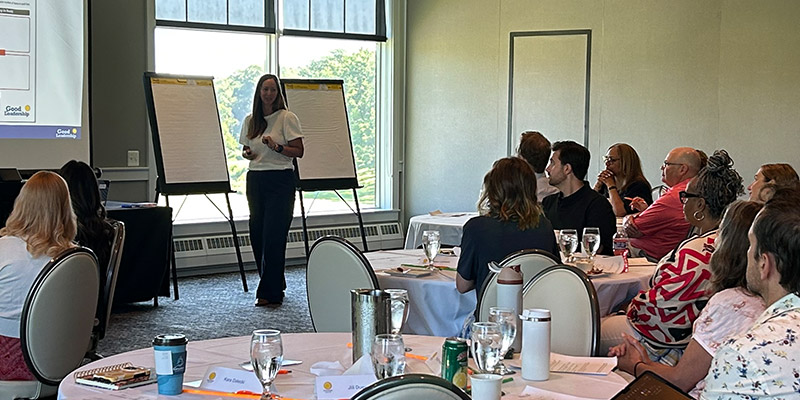

Recently, I spent a day with the Good Leadership coaches at our annual Coaches Retreat. The purpose was simple – align around where our firm is headed, strengthen our coaching community, and sharpen our ability to help leaders build cultures of healthy accountability.
The morning focused on the future of Good Leadership, and the afternoon focused on healthy accountability, the idea that is shaping our future.
The State of the Firm
Using the Good Leadership Momentum Analysis Tool, we began by reflecting on momentum, both positive and negative, across the business. The conversation highlighted client expansion, new client growth, a thoughtful and engaged coaching team, and a solid internal team.
One message stood above the rest – healthy accountability is no longer simply a service offering, it is becoming the organizing principle for how we grow.
Producing the Cathartic Shift
One of the most important discussions centered on what coaches actually do. Coaches and facilitators do not produce products. They produce motivational insights that move people to new and better behaviors. At Good Leadership, we call this the “cathartic shift.” If our clients leave a retreat, coaching session, or leadership experience seeing themselves differently and acting differently, meaningful change becomes possible.
Healthy Accountability Takes Center Stage
After lunch, the conversation shifted entirely to healthy accountability. The coaching team explored research, practical applications, and the coaching conversations that help leaders create accountability without fear.
One research finding sparked significant discussion: 95% of people care about delivering quality work on time.
Yet many employees still associate accountability with punishment, investigation, or blame. That insight reinforces something I have observed throughout my career. Most people do not resist accountability; they resist unhealthy accountability.
Healthy accountability exists in an environment where individuals take personal ownership and embrace the support of the team to deliver quality work on time.
Six Leadership Practices
Throughout the afternoon, coaches explored six leadership practices that create a culture of healthy accountability:
The conversation repeatedly returned to one mindset shift: Move from holding people accountable to helping people succeed. That shift changes how leaders communicate, coach, and build trust.
What I Took Away
The retreat reminded me why I am optimistic about the future of Good Leadership.
Our coaches are aligned around a common purpose. Our intellectual property continues to mature. Most importantly, healthy accountability is proving to be a practical answer to many of the challenges leaders face today.
The question I left with is one I will continue asking leaders:
Are you spending time holding people accountable, or helping people create the clarity, ownership, and support needed to seek accountability for themselves?