
No products in the cart.
Quality, access, and employee morale improve significantly when physicians know how to effectively influence and lead organizational change. The Physician Leadership Accelerator is a proven longitudinal, cohort-based leadership development program.
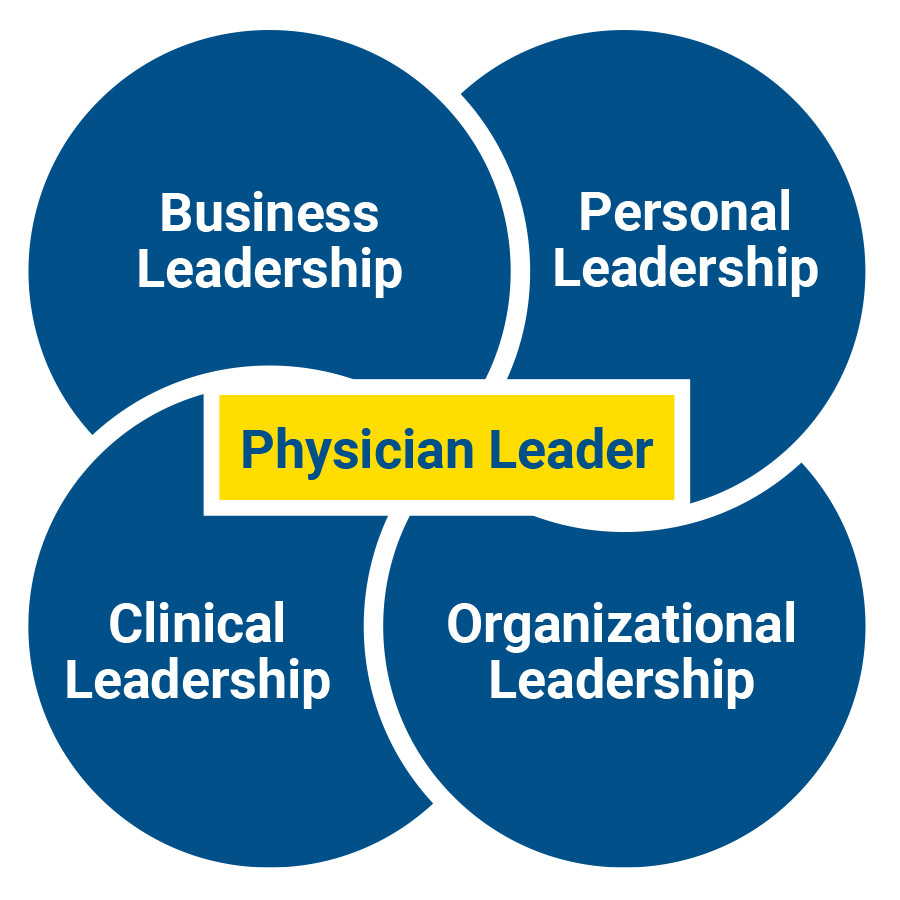
It works because executive coaches and industry experts work together to build physician confidence in business, clinical, personal, and organizational leadership. Investing in physicians as leaders is good for the business of healthcare.



Proven development model tailored to the demands of busy physicians who are seeing patients every day, led by seasoned industry experts
Apply learning in real-time and create actionable change through an Organization Change Capstone Project
Outcomes-focused programming in a format that is faster and less expensive than university programs
Schedule: 10-month program – August 2026 through May 2027
Early and mid-career physicians learning to handle administrative, committee, or business leadership commitments beyond seeing patients day-to-day. 5+ years in practice.
The Physician Leadership Accelerator is based on Accelerated Learning theory – a small group of six physicians will be connected to one another through one Good Leadership Executive Coach. Together, through a series of retreats, webinars, and cohort meetings, the cohort will collectively learn new skills, behaviors, and ways of thinking. All participants will come together twice a year for a 2-day in-person retreat, where subject matter experts will facilitate workshops tied to key subjects.
Lead Coach and Curator:
· Paul Batz – CEO of Good Leadership is the Lead Coach and Curator
Founding Partners:
· Troy Simonson – Founder and CEO of True North Health Partners, former CEO of Twin Cities Orthopedics, and current CEO of Proliance Surgeons
· Rachel Uzlik, CPHQ – Founder and CEO of Aetos Health, and CEO of PELTO Health Partners
· Mark Sannes, MD – Chief Medical Officer, HealthPartners Care Group
· John Pryor, MD MHCDS – President and Chairman of Proliance Surgeons
· David Jevsevar, MD MBA FAAOS – Chief Executive Officer at OrthoVirginia
Steering Team Members:
· Yarrow McConnell, MD – Starting June: Lead, Breast Program, MultiCare Cancer Institute at MultiCare Health System
· Rob Winfield, MD FACS – Head of Surgery, University of Kansas Medical Center
· Ria Paul, MD – Chief Medical Officer at Santa Clara Family Health Plan
The Steering Team is comprised of early adopters – people who have shown enough interest in the program to volunteer their time to help it come alive. The collective group is facilitated by Paul Batz, Founder and CEO of Good Leadership. They are providing their personal and professional insights to the curriculum design. Some of the Steering Team members will also be participating in workshops and hosting sessions at the retreats.
The coaches will come from the coaching team at Good Leadership. Coaches will be selected based on the collective experience, aspirations, and personalities of each cohort group. Follow this link to see the full roster of Good Leadership Coaches.
The client services team of Good Leadership will interview each participant to learn about their motivation, goals, and leadership experience. The most effective cohort groups are comprised of people with similar motivation and varied backgrounds, skills, and experiences. Cohorts are best when they are multi-specialty, and represent an array of organizations.
The intention is to have physicians with varied specialties and backgrounds, including large systems and smaller physician-owned groups.
Business Leadership:
Clinical Leadership:
Organizational Leadership:
Personal Leadership:
Executive coaching involves exploring personal and professional aspirations, learning how to leverage individual motivators, personality, and how to manage unprofessional stress responses. The coach will guide each physician in 1:1 conversations using specific Good Leadership coaching tools. Each participant will also receive the observations of people they work with through a process called Discovery Interviews. The coach will translate the aspirations, strengths, weaknesses, and motivations of each participant into a Leadership Development Blueprint which will guide each individual’s goals and focus areas.
Each 60-minute webinar will require between 30-60 minutes of pre-reading, listening to a podcast, etc. Homework will primarily be spent on the Organizational Change Capstone Project. The total time investment per month for pre-work and homework will be approximately 2 hours.
At the beginning of the program, participants will select a real-time change they can lead to better their organizations. The physicians will apply the skills, behaviors, and ways of thinking that they learn throughout the accelerator to their project. 2026 examples include:
All webinars will be recorded and discussed in the cohort meetings.
Retreats will take place on:
Retreats will start on Friday night with an Opening Reception (beginning at 4:30pm CST), and end on Sunday mid-morning with a Closing Brunch (completed by 11:30am CST).
The short answer is “no.” However, the retreats have the highest collective value in the program – that’s where physicians expand their network and engage in real-time learning. Attending both retreats will optimize the investment of time, energy, and money for the program.
Good Leadership works with University of Kansas Office of Continuing Education. Claiming credit for a webinar or retreat is very simple, done through eeds.com, and will be discussed at the beginning and end of each learning session. Up to 32 credits are available over the course of the 10-month program.
$19,500. Travel and accommodation expenses not included.
Travel to Minneapolis/St. Paul by airline varies from $200 – $800, depending on locale and time of year. Ground transportation should not exceed $150 per trip.
Hotel expense is estimated at $250 per night. A flight, ground transportation, and 2-3 nights in a hotel could be as much as $1,700 – likely less. With two retreats, the total expense could be as much as $3,400 total – likely less.
Considering the fees for the program, and the additional fees and time that go into the project, the Organization Change Capstone Projects had an average 5-to-1 return on investment within the first year. Some projects had as high as 11-to-1 in six months.

Founder and CEO
Good Leadership
Chief Executive Officer
OrthoVirginia

Lead, Breast Program, MultiCare Cancer Institute
Multicare Health System

MD, Chief Medical Officer
Santa Clara Family Health Plan

President and Chairman
Proliance Surgeons
Chief Medical Officer
HealthPartners

Founder and CEO
True North Health Partners

Founder and CEO
Aetos Health
Head of Surgery
University of Kansas Medical Center





View or download the information on this page in PDF form.