
No products in the cart.

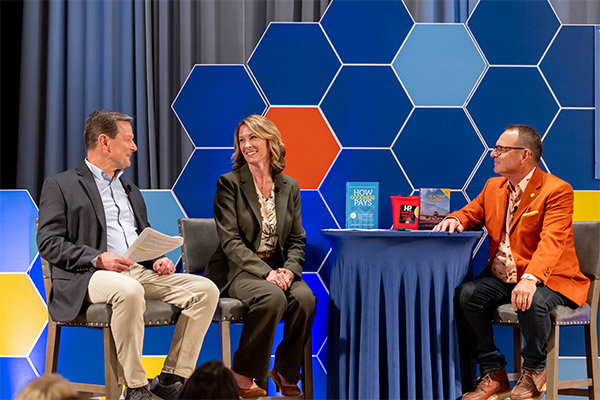
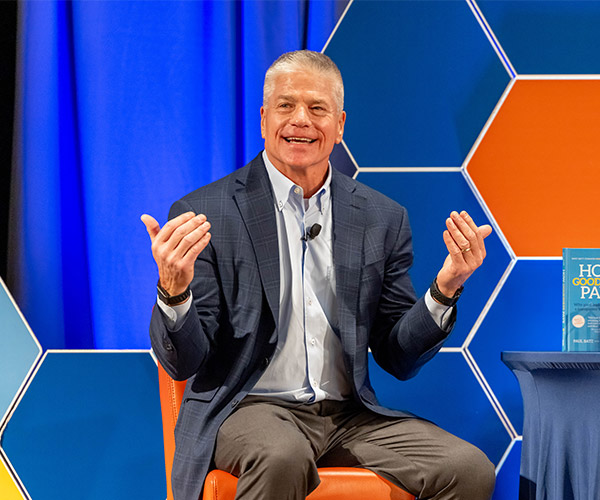
At our November Good Leadership Breakfast, 225 guests gathered to hear from former Restaurant Technologies CEO Jeff Kiesel, a resilient leader who spent 21 years building an extraordinary company in the not-so-sexy world of cooking oil.
During that time, Jeff helped grow RTI into a billion-dollar business while navigating five different private equity owners. That staying power made him the perfect speaker to help us launch the Good Leadership First-Time CEO Practice.
Our research, How First-Time CEOs Beat the Odds of Failure, found that 68% of CEOs acknowledge entering the role unprepared, while nearly half of new CEOs are viewed as underperforming or failing within 18 months.
Listening to Jeff, many of the lessons from that research came to life. Three stood out.
1. Healthy accountability comes from shared purpose.
Jeff described the breakthrough in healthy accountability as the moment people become“intrinsically motivated for the company’s success.”
That requires a shift in mindset.
“For me, the company’s success is much more important than my personal success.”
When enough people begin thinking that way, alignment grows, momentum builds and people stop protecting their individual lanes. They begin winning together.
2. Integrity matters at pivotal moments.
Early in his career at GE, Jeff was asked by a senior leader to say something in a presentation that he knew wasn’t true. He refused. When told he had a leadership issue, his response was memorable:
“You have an ethics issue. I can grow into mine.”
The experience helped crystallize a lesson that followed him throughout his career: leadership eventually puts integrity to the test. The decisions made in those moments shape the leader you become.
3. Culture and long-term vision create resilience.
RTI’s journey wasn’t a smooth one. The company endured a commodity crash, financial crisis, covenant breaches, supply challenges, and repeated ownership transitions. Yet its values remained constant.
“We would not have been able to do that and have the support of everybody that worked for us had we not had those values and a long-term vision.”
That long-term thinking allowed the leadership team to learn from each private equity owner without allowing a three-to-five-year ownership cycle to redefine the company’s identity. As Jeff put it, the owners may be there temporarily, but “we want to be here for 50, 60.”
That may be the biggest lesson of all.
Durable companies don’t simply survive change. They know who they are, where they’re going, and what they refuse to compromise along the way.
Follow this link to download the Good Leadership research report, How First-Time CEOs Beat the Odds of Failure.
To hear more about the morning, listen to the Good Leadership Podcast episode out today where Dan Mallin, a lifelong entrepreneur, and I recap the key moments from the November 13 Breakfast.